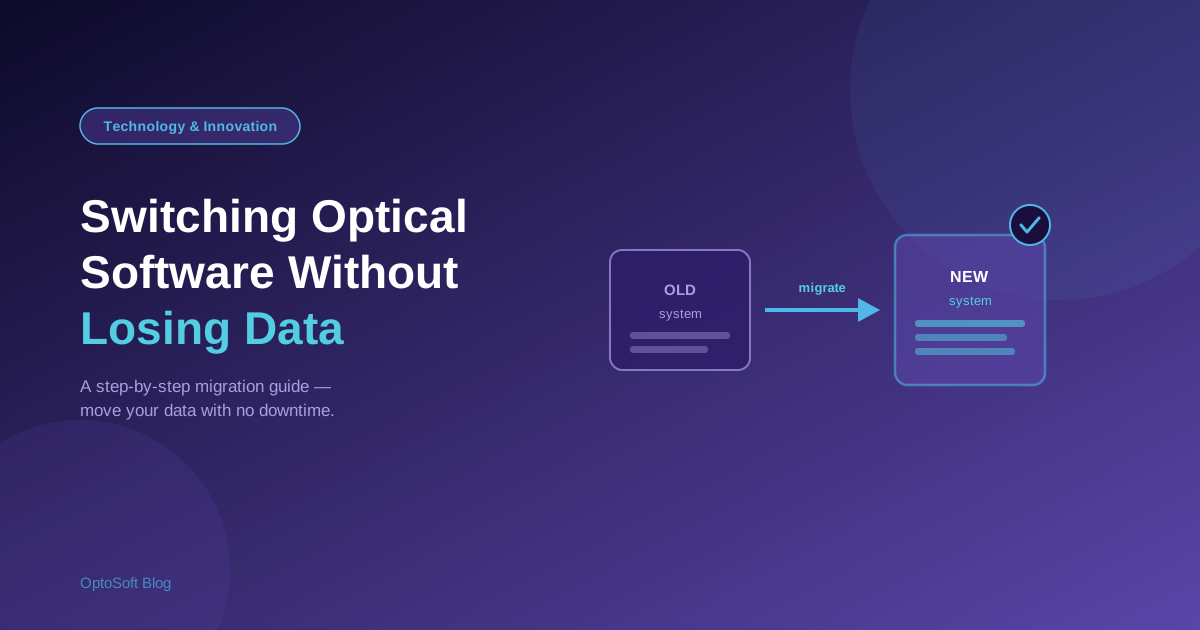
Plenty of optical shops stay on software they have outgrown because switching feels risky — "what if I lose my patient records?" In practice, a planned migration is routine and low-risk. This is a step-by-step guide to changing optical software without losing data or shutting your shop, plus the questions that tell you whether a new vendor will make the move easy.
Why optical shops put off switching — and why it is usually overblown
The three big fears are lock-in, losing data, and downtime. All three are manageable: your data is yours, a good vendor helps you import it, and a sensible cutover plan keeps the shop running throughout. The real cost is usually staying on software that slows you down every day. If you have already chosen a new system, the migration is the next step, not a wall.
Step 1 — Audit your current data
List what you actually hold: patient and customer records, prescriptions, inventory (frames, lenses, contact lenses), sales history, and outstanding balances or job orders. Knowing the shape and volume of your data tells you what must move and where the tricky parts are.
Step 2 — Decide what to migrate vs archive
You rarely need to move everything. Active patients, current prescriptions and live stock should come across. Years of old transactions might be archived (exported and stored) rather than imported, keeping the new system clean and the migration faster. Decide this deliberately.
Step 3 — Export from your old system
Find out what formats your current software can export — usually CSV or Excel, sometimes a database backup or an API. Then check what the new vendor can import. The gap between those two is the real work of a migration, so confirm it before you commit. A vendor that offers assisted import will map your old fields to the new ones for you.
Step 4 — Plan the cutover
Choose how you switch over:
- Parallel run — use both systems briefly so nothing falls through the cracks.
- Off-peak timing — migrate over a quiet period or after hours.
- A clear go-live date — everyone knows when the new system becomes the source of truth.
A cloud system makes this easier because there is nothing to install on every machine — see cloud vs on-premise optical software.
Step 5 — Validate the migrated data
Before you rely on the new system, spot-check it: open a sample of patient records and confirm their prescriptions came across correctly, check a few stock counts against the shelf, and confirm outstanding balances match. Fixing a mapping issue now is easy; finding it in front of a customer next month is not.
Step 6 — Train staff and go live
Give your team a short hands-on session before go-live so day one is not a scramble. Good onboarding from the vendor shortens this a lot. Once staff are comfortable and the data checks out, switch over on your planned date.
Migration mistakes to avoid
- No backup of the old system before you start.
- A big-bang cutover with no parallel run or fallback.
- Skipping validation and trusting the import blindly.
- Migrating junk — dragging years of dead data into a fresh system.
- Going live at your busiest time.
How OptoSoft handles data migration and onboarding
OptoSoft supports assisted migration of your existing patients, prescriptions and stock, so you are not re-keying records by hand, plus onboarding to get your team productive quickly. Because it is cloud-based, there is nothing to install across machines for go-live. If you are weighing it against your current system, see the neutral optical software comparison and specific match-ups such as OptoSoft vs Eyefinity and OptoSoft vs RevolutionEHR.
Frequently asked questions
Can I migrate data from my old optical system?
Usually yes. Most optical software can export patients, prescriptions and stock as CSV, Excel, a database backup or via an API, which a new system can then import. Ask your new vendor what they accept and whether they offer assisted import before you commit.
Will I lose patient records when I switch optical software?
Not with a planned migration. Back up your old system first, export your records, import and then validate them by spot-checking before go-live. Your data belongs to you, and a careful process keeps it intact through the switch.
How long does it take to switch optical software?
It varies with data volume and how much you migrate versus archive, but a focused move of active patients, prescriptions and stock is often days rather than weeks. Assisted import and good onboarding shorten it further.
Can I run two optical systems during the switch?
Yes, and a short parallel run is a common, low-risk approach. You keep the old system available as a fallback while the new one becomes the source of truth, then retire the old one once the new system is validated and staff are comfortable.
Thinking about switching? See how OptoSoft migrates your data or compare it with your current system.