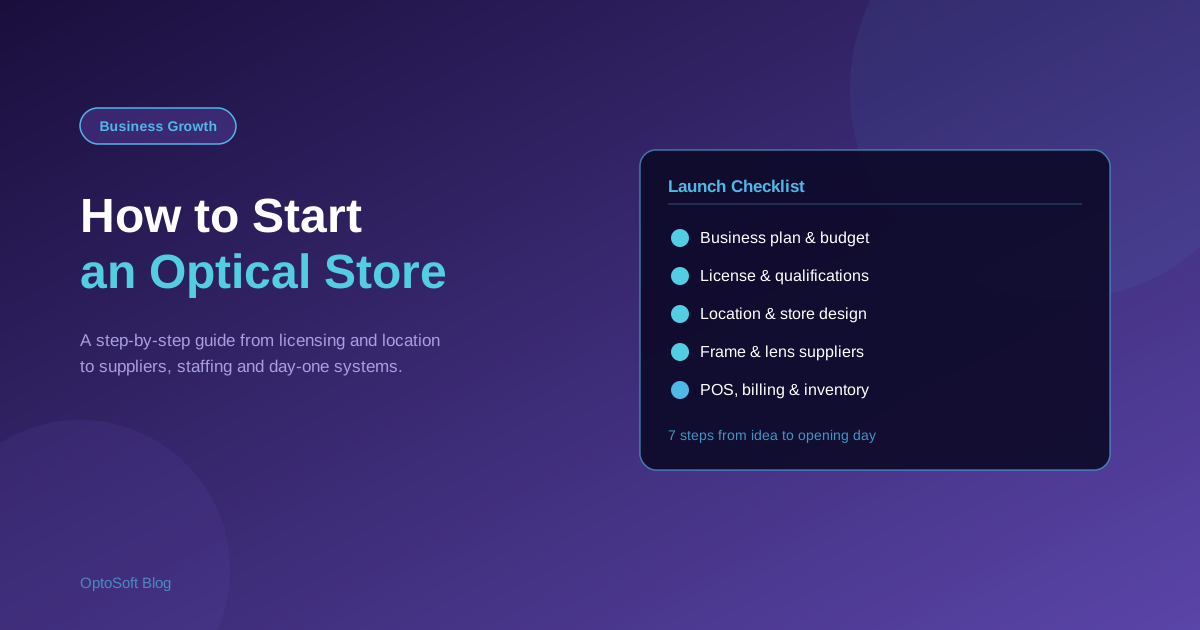
Opening an optical store combines retail, healthcare and small-business management in one shop. Done well, it is a resilient business with repeat customers and healthy margins. This step-by-step guide walks through what it takes to start an optical store — from the first budget to opening day and beyond.
Is an optical store a good business?
Eyewear is a need, not a luxury: a large share of the population requires vision correction, and prescriptions change over time, so customers return. Margins on frames and lenses are healthy, and add-on services such as eye tests and contact lenses build loyalty. Like any retail business it takes capital and good management, but demand is steady and recession-resistant.
Step 1 — Write the business plan and budget
Start with a simple plan: who your customers are, what you will stock, your pricing, and your costs. Budget for both one-time setup (fit-out, equipment, opening stock, deposits) and ongoing costs (rent, salaries, utilities, software). Knowing your break-even point before you sign a lease is the single most useful number you can have.
Step 2 — Sort out licensing and qualifications
Requirements vary by country and region, so confirm the rules with your local authority. In most places dispensing spectacles or performing eye tests requires a qualified optometrist or dispensing optician, plus a business registration and tax registration. Check whether you need a licensed professional on staff before you can legally dispense.
Step 3 — Choose a location and design the store
Footfall matters for retail optics. Look for visibility, parking or transit access, and proximity to your target customers. Inside, plan a welcoming display area for frames, a private space for eye tests, and a dispensing counter. The frame board is your main sales surface — design for easy browsing.
Step 4 — Source frames, lenses and lab partners
Build relationships with frame distributors across price tiers, and choose a reliable lens lab for glazing. Many new stores use consignment frames to reduce upfront cost. Decide whether you will glaze in-house or outsource to a lab, as this affects equipment and turnaround times.
Step 5 — Hire and train staff
Even a small store needs the right mix: a qualified optometrist or optician for clinical work, and friendly retail staff who can advise on frames and handle sales. Train everyone on your systems and on consistent, accurate dispensing — errors are expensive to remake.
Step 6 — Set up POS, billing and inventory software
Choose your software before you open, not after. A purpose-built optical shop management system links prescriptions, sales, inventory and patient records in one place, so you are not juggling spreadsheets from day one. At minimum you want optical POS for billing, stock control that understands frames and lenses, and a patient record that stores each prescription for easy reorders.
Step 7 — Launch and market your optical store
Announce your opening locally: a Google Business Profile, local listings, and a simple website help customers find you. Offer a clear first reason to visit, collect contact details for recall reminders (eye tests are recurring), and ask happy customers for reviews.
Common mistakes new optical store owners make
- Over-investing in slow-moving premium frames before you know what sells.
- Choosing software after opening, then migrating messy data later.
- Underestimating recall — not capturing customer details for repeat eye tests.
- Ignoring stock control until dead stock ties up cash.
Frequently asked questions
How much does it cost to open an optical store?
It varies widely by country, location and size, but plan for fit-out, equipment, opening stock and deposits as one-time costs, plus several months of running costs as a buffer. Building a detailed budget and break-even point during planning is essential.
Do I need a license to open an optical shop?
In most regions, yes — dispensing spectacles or performing eye tests usually requires a qualified optometrist or dispensing optician plus business and tax registration. Requirements differ by country, so confirm with your local regulator.
What software does a new optical store need?
At minimum: point-of-sale and billing, inventory control built for frames and lenses, and patient records that store each prescription. An all-in-one optical shop management system covers these together so data is not split across tools.
How long does it take to open an optical store?
From plan to opening typically takes a few months, driven by licensing, securing premises, fit-out and stocking. Setting up software is fast by comparison and is best done before launch.
Opening a store? Run it on one system from day one — see the OptoSoft optical shop management system or view pricing and the free plan.