The Case for Digital Patient Records in Optical Care
Patient records are the backbone of every optical practice. Every prescription filled, every frame dispensed, every follow-up appointment booked — all of it depends on accurate, accessible patient data. Yet many optical stores still rely on physical prescription cards, handwritten notes, and filing cabinets full of folders. This approach carries significant risks: records can be lost or damaged, staff waste time searching for files, and there is no easy way to analyse trends or trigger proactive outreach.
Digital patient records solve all of these problems and open up capabilities that paper simply cannot match. Here is a comprehensive look at why the shift is so important and how to make it successfully.
Key Benefits of Digital Patient Records
- Instant retrieval: Any authorised staff member can access any patient record from any device in seconds. No more searching through filing cabinets during a busy Saturday appointment rush.
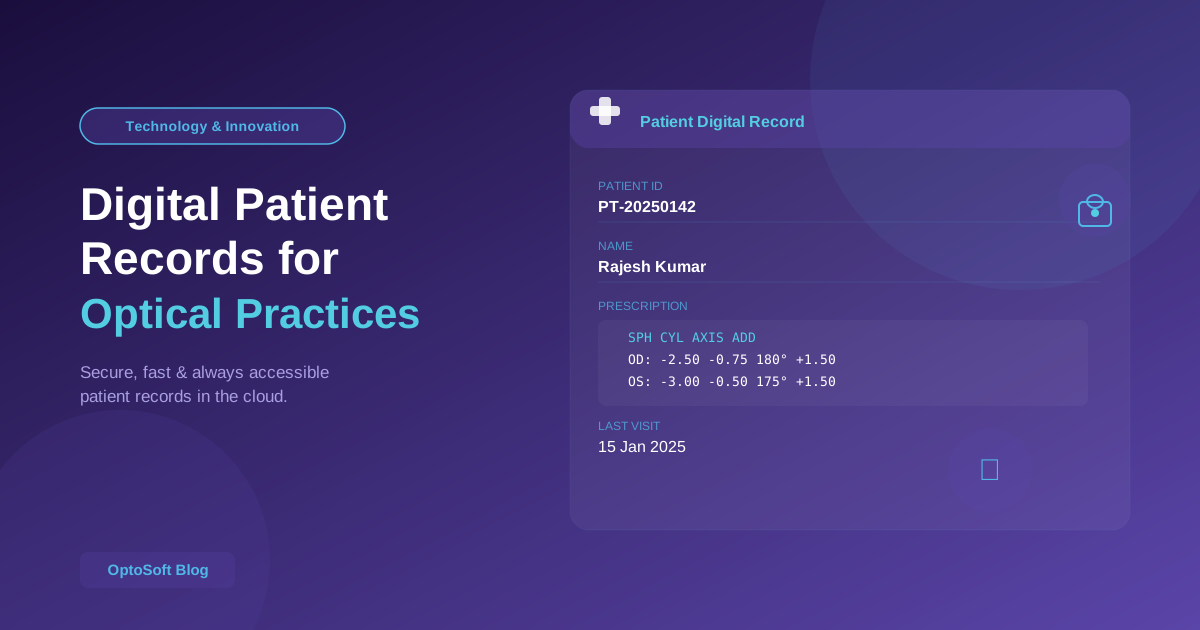
- Complete prescription history: Every spectacle lens and contact lens prescription is stored in structured fields, with dates, prescribing optometrist details, and notes — all in one place.
- Multi-location access: For practices with more than one store, digital records mean a patient who visits your second location gets the same quality service as at your flagship store.
- Automated follow-ups: When a prescription is due for renewal, the system can automatically trigger a WhatsApp message or SMS without any manual action from staff.
- Error reduction: Structured digital forms with validation rules eliminate the transcription errors common with handwritten notes.
Security and Privacy Considerations
Patient health data requires careful protection. OptoSoft addresses this with multiple security layers:
- SSL encryption: All data transmitted between the browser and the server is encrypted using industry-standard SSL protocols.
- Role-based access: Store owners can configure which staff members can view, edit, or delete patient records — ensuring the right level of access for every role.
- Audit logs: Every change to a patient record is logged with a timestamp and user ID, creating a complete audit trail.
- Cloud backup: Data is backed up automatically, so a hardware failure at the store does not mean lost records.
How to Implement a Paperless Records System
Transitioning to digital records does not have to happen overnight. A phased approach works best for most practices:
- Start with new patients: Add all new patients digitally from day one. This immediately stops the creation of new paper records.
- Import active patients: Use OptoSoft's bulk import tool to add your most active patients — those who have visited in the past two years — from a spreadsheet or existing system.
- Archive historical records: Older patient files can be scanned and attached as PDFs, or simply filed and referenced only when that patient returns.
- Train staff thoroughly: Run a two-hour training session before go-live. OptoSoft's interface is intuitive, but staff need to feel confident before the first real patient sits in the chair.
Digital patient records are not just an operational upgrade — they are a foundation for the kind of personalised, proactive eye care service that today's patients expect and return for.
Ready to modernise your optical shop? View OptoSoft pricing and the free plan or explore the all-in-one optical shop management system.