A spectacle order is not a normal retail sale. One customer, one bill, but several moving parts: a frame, a pair of lenses made to a prescription, coatings, perhaps a case and a lens-care kit, and a job that spends days at the lab before the customer collects it. A generic till receipt cannot describe that, and a bill that cannot describe it leads to disputes, remakes and awkward phone calls. This guide covers how to bill an optical sale correctly, from what the invoice must show to how to handle a deposit.
What an optical invoice has to show
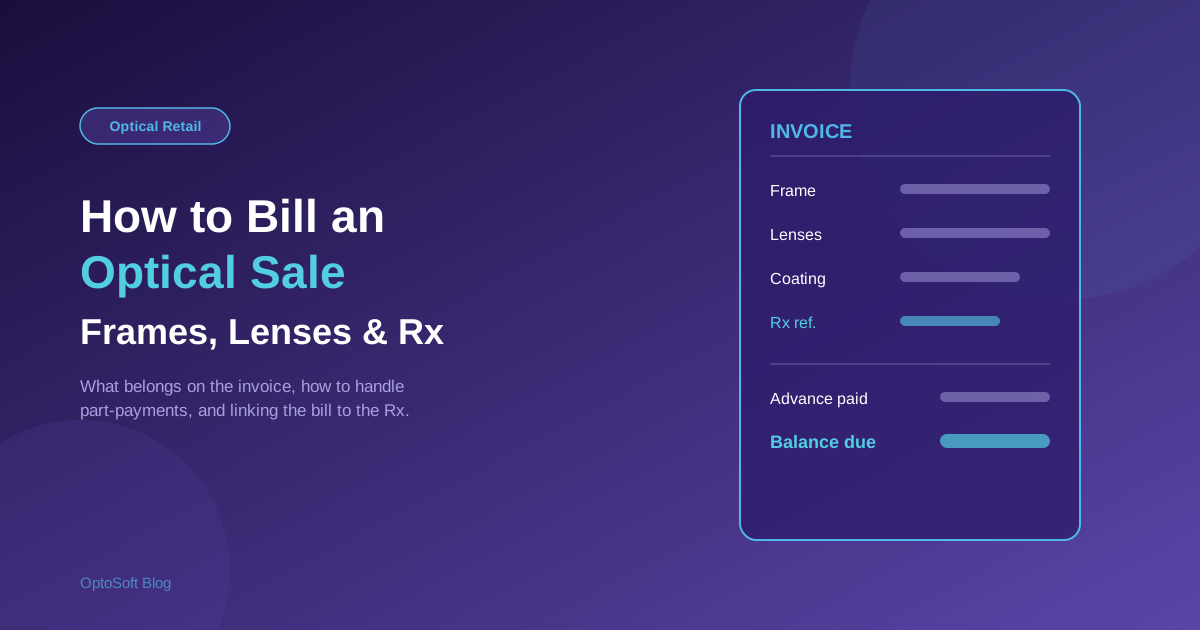
A generic retail bill lists items and a total. An optical invoice has to do more, because the product is made to order. As a working checklist, a good optical invoice shows:
- Customer details — name and contact number, so the job can be traced and the customer reached when it is ready.
- The frame — brand, model, colour and size or SKU.
- The lenses — type (single vision, bifocal, progressive), material, index, and each coating or tint as its own described item.
- Accessories — case, cloth, lens-care items.
- The prescription reference — which prescription the job was made against, and when it was written.
- Amounts — price per item, any discount, tax where it applies, total, amount paid and balance due.
- Dates — order date and promised collection date.
Requirements for what an invoice must legally contain differ by country, so check your local rules or ask your accountant. This guide covers the optical side of the bill, not tax law.
Pricing the job: one line or several?
There are two common ways to present the price of frame, lenses and coatings, and each has a trade-off.
- Itemised lines — frame, lenses and each coating priced separately. This is clearer for the customer, makes it easy to explain what an upgrade costs, and keeps your stock and sales reports accurate by category.
- A bundled price — one line for "frame plus lenses". It is quicker to quote, but it hides the breakdown. That makes returns, remakes and partial refunds harder to work out, and it blurs which category earned what.
Many shops quote a bundled price at the counter and still record the itemised breakdown behind it. Whichever you choose, apply it consistently, so two staff members do not bill the same job two different ways.
Tie the invoice to the prescription it was dispensed against
The prescription is the reason the lenses are what they are. If the bill does not point to it, you cannot answer the question that eventually comes: "was this made to the right prescription?" Linking the two means:
- the lens specification on the job matches the prescription on file, with no re-typing between the two;
- if the customer returns with a complaint, you can see what was prescribed, what was ordered and what was billed in one place;
- a reorder or a second pair later starts from a verified prescription rather than from memory.
Whether the full prescription values print on the customer copy is a choice for your shop and local practice. The reference to it should always be on the record. If you are unsure how to read the values themselves, see how to read an eye prescription.
Part-payments while the job is at the lab
Spectacles are made to order, so it is normal to take a deposit and collect the balance on delivery. Handled loosely, this is where optical shops lose track of money. A tidy approach:
- record the advance against the order at the time it is taken, with the date and the payment method;
- keep the balance visible on the job, so whoever hands over the glasses sees what is still owed;
- issue a receipt for each payment, and a final invoice when the job is complete;
- decide your policy in advance for orders that are never collected, and tell the customer when they pay the deposit.
Tax and currency when you sell across countries
Tax treatment of spectacles and eye care varies widely. Some countries tax them at the standard rate, some at a reduced rate, and some treat prescription eyewear differently from sunglasses or accessories. This post gives no tax advice, and it does not claim that any software makes you compliant with a particular tax regime. What it does suggest:
- confirm with your accountant how each product category is taxed where you trade;
- make sure your billing tool can apply the rates you tell it to, per item;
- show one currency on each invoice, and never mix currencies on a single bill.
Insurance: record the details, generate the claim form
If some of your customers pay through insurance, billing has an extra step. At a minimum, record the insurer and the policy or member details on the sale, and keep the part the customer pays separate from the part to be claimed. OptoSoft can store the insurance details and generate the claim form from the system. It does not transmit claims electronically to insurers, and it does not assign ICD-10 or CPT codes, so those steps stay with you or your claims process.
Getting the invoice to the customer
Print a copy for the customer and keep a record for the shop. Many customers also like a digital copy, because it is easy to find again for a warranty or an insurance claim. OptoSoft can share the invoice with the customer on WhatsApp after the sale.
Billing in OptoSoft
OptoSoft is a cloud-based optical platform where the prescription, the job and the invoice live in one record, so a bill is built from the order rather than typed up separately. The optical POS software page covers the billing and point-of-sale features, and the optical shop management system page shows how billing connects to inventory and customer records.
Common billing mistakes to avoid
- Billing the sale without recording which prescription it was made against.
- Taking a deposit in cash and not recording it on the order.
- Bundling prices so tightly that a remake or a refund cannot be worked out afterwards.
- Entering the same customer twice under slightly different names, which splits their history.
Frequently asked questions
What should an optical invoice include?
At a minimum: customer details, the frame, the lenses with each coating or tint, any accessories, a reference to the prescription the job was made against, the price of each item, tax where it applies, the total, the amount paid and the balance due, plus the order and collection dates. Exact legal requirements vary by country.
How do you bill a spectacle order paid in two parts?
Record the deposit against the order when it is taken, with the date and payment method, and keep the balance visible on the job. Issue a receipt for each payment and a final invoice at collection, so the customer and the shop both have a clear record of what was paid and what remains.
Should the prescription appear on the invoice?
The invoice should always reference the prescription the job was made against, so the order, the lenses and the bill can be traced to one another. Whether the full prescription values are printed on the customer copy depends on your shop and local practice.
Is there free optical billing software?
OptoSoft's free plan covers customer/patient records and prescription (Rx) management. POS billing, inventory, multi-store, and CRM/marketing are on the paid plans, so free does not include invoicing. Check the pricing page for the current plans.
Want billing, prescriptions and stock in one record? See OptoSoft's optical POS and billing or compare the plans, including the free one.